
Frameless Cabinets: Why European Construction Is Changing Modern Homes
If you’ve researched custom cabinetry, you’ve probably come across the term frameless cabinets. It’s one of the defining characteristics of European cabinetry, yet many homeowners aren’t entirely sure what it means or why it matters. Some assume it’s simply a modern look. Others believe it’s only for contemporary kitchens. In reality, frameless cabinet construction is … Continued
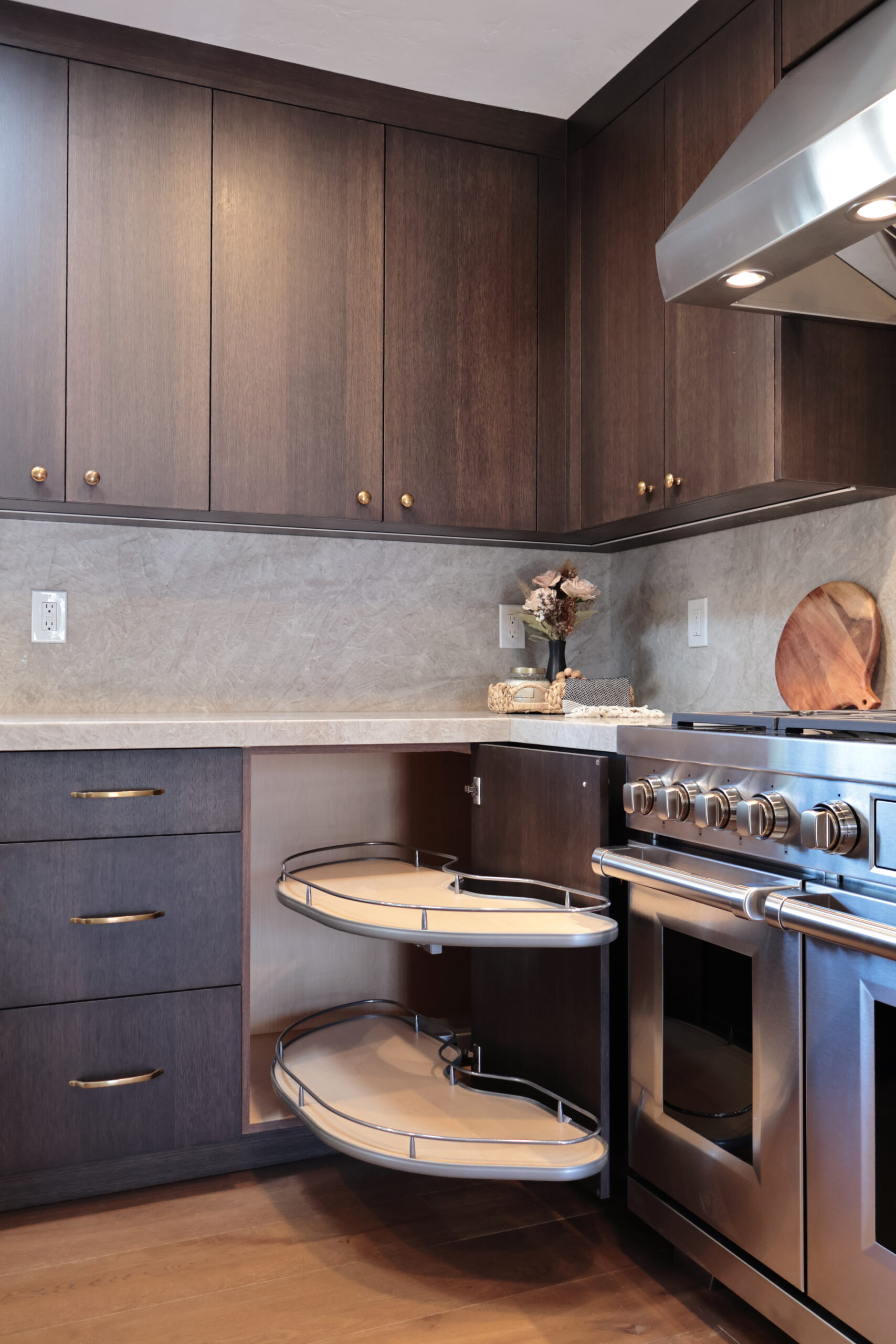
If you’ve researched custom cabinetry, you’ve probably come across the term frameless cabinets. It’s one of the defining characteristics of European cabinetry, yet many homeowners aren’t entirely sure what it means or why it matters.
Some assume it’s simply a modern look. Others believe it’s only for contemporary kitchens.
In reality, frameless cabinet construction is a building method—not a style. It influences how cabinets function, how they fit together, how much storage they provide, and how long they perform.
Whether you prefer a minimalist slab door or a slim Shaker profile, understanding frameless construction will help you make better decisions for your home.
What Are Frameless Cabinets?
Traditional North American cabinets typically include a face frame attached to the front of the cabinet box. Doors and drawers mount to that frame, which supports the cabinet and creates the visible front structure.
Frameless cabinets eliminate that additional frame.
Instead, doors and drawer fronts attach directly to the cabinet box itself. Although this may sound like a small change, it affects nearly every aspect of the finished cabinetry.
Without a face frame, the openings become larger, the reveals stay more consistent, and the overall appearance feels cleaner and more architectural.
This construction method originated in Europe decades ago and has since become the standard for modern European cabinets.
Why Does European Cabinetry Use Frameless Construction?
European design has always emphasized efficiency, precision, and thoughtful engineering.
Rather than adding decorative elements that don’t improve performance, European cabinetry focuses on creating systems where every component serves a purpose.
Frameless construction supports that philosophy by offering:
- More usable interior storage
- Cleaner visual lines
- Better alignment between cabinets
- Greater flexibility for interior accessories
- Easier integration of modern hardware
As a result, frameless cabinets have become one of the defining features of European kitchen design.
Frameless Cabinets vs. Face-Frame Cabinets
Although both construction methods can produce beautiful kitchens, they approach the project differently.
| Frameless Cabinets | Face-Frame Cabinets |
|---|---|
| Larger cabinet openings | Smaller openings due to face frame |
| Modern European construction | Traditional North American construction |
| More accessible storage | Slightly reduced interior access |
| Precise door alignment | Visible frame between cabinets |
| Ideal for integrated hardware | Better suited to some traditional styles |
Neither method is inherently “wrong.”
Instead, each reflects a different design philosophy.
At Euromax, we specialize in frameless European cabinetry because it aligns with our commitment to precision, customization, and long-term performance.
Do Frameless Cabinets Last as Long?
This is one of the most common questions homeowners ask.
The answer depends far more on how the cabinet is built than whether it has a face frame.
A well-built frameless cabinet uses premium materials, precision machining, quality edge banding, and professional hardware.
When those elements come together correctly, frameless cabinets offer exceptional durability for everyday use.
For this reason, they have been trusted throughout Europe for decades in both residential and commercial applications.
Do Frameless Cabinets Provide More Storage?
Yes.
Because there isn’t a face frame reducing the opening, drawers and pull-out systems can use more of the available space.
The difference might seem small on a single cabinet.
However, across an entire kitchen, pantry, or mudroom, those additional inches add up to noticeably more usable storage.
Frameless construction also makes specialty accessories easier to integrate, including:
- Pull-out pantry systems
- Waste and recycling centers
- Interior drawer organizers
- Corner storage solutions
- Pocket door systems
- Appliance garages
These features work together to create kitchens that are both beautiful and practical.
Are Frameless Cabinets Only for Modern Kitchens?
Not at all.
This is one of the biggest misconceptions surrounding European cabinetry.
Construction and appearance are two different things.
A frameless cabinet can support:
- Slim Shaker doors
- Phantom (Ghost) Shaker profiles
- Traditional painted finishes
- Natural wood veneers
- Matte engineered surfaces
- Contemporary slab doors
In other words, homeowners don’t have to choose between timeless design and modern construction.
Many of today’s most elegant kitchens combine traditional door styles with frameless European engineering.
Materials Matter Just as Much
Construction is only part of the equation.
The quality of the materials determines how cabinets perform over time.
At Euromax, our frameless cabinets can be built using premium plywood or high-grade four-sided edge-banded TFL, depending on the goals of the project. Both options provide excellent durability when manufactured correctly.
From there, clients can choose from a wide range of finishes, including natural wood veneers, painted surfaces, engineered materials like FENIX®, textured laminates, and other specialty European products.
Selecting the right material isn’t about choosing the most expensive option—it’s about choosing the right solution for the way the space will be used.
Why Interior Designers Prefer Frameless Cabinets
Many interior designers appreciate frameless construction because it offers greater design flexibility.
Consistent reveals create cleaner sightlines.
Cabinets align more precisely.
Integrated appliances fit naturally into the overall composition.
Specialty hardware becomes easier to incorporate.
As a result, designers gain more freedom without sacrificing functionality.
This is one reason frameless European cabinetry continues to appear in many luxury residential projects.
Our Fully In-House Process
Every project begins with understanding how the client wants the space to function.
Our designers work closely with homeowners, builders, and interior designers to develop cabinetry that complements the architecture and supports daily life.
Once the design is finalized, our own team manufactures every cabinet before completing the installation.
Because design, manufacturing, and installation remain under one roof, we maintain consistent quality from the first drawing through the final adjustment.
That integrated process allows us to deliver fully custom cabinetry without relying on predetermined cabinet sizes or imported product lines.
Frequently Asked Questions
Are frameless cabinets stronger?
When built with quality materials, precision joinery, and premium hardware, frameless cabinets are exceptionally durable.
Can frameless cabinets look traditional?
Yes. Construction and door style are separate decisions. Slim Shaker and Phantom Shaker doors pair beautifully with frameless construction.
Are frameless cabinets more expensive?
Not necessarily. Pricing depends on materials, finishes, hardware, project complexity, and customization—not simply the construction method.
Why are frameless cabinets associated with Europe?
European manufacturers adopted frameless construction decades ago because it improves efficiency, storage, and precision. Today, it remains one of the defining characteristics of European cabinetry.
The Right Construction Supports Great Design
The best cabinetry isn’t defined by a single style.
It’s defined by thoughtful engineering, quality materials, and careful craftsmanship.
Frameless construction has become a cornerstone of European cabinetry because it creates cleaner lines, improves functionality, and supports the level of precision expected in today’s luxury homes.
Whether your vision leans toward a warm wood veneer kitchen, a slim Shaker design, or a minimalist slab door, frameless cabinets provide a foundation that allows the design to perform as beautifully as it looks.
 >
> >
> >
>