
Why Fully Custom Cabinets Matter in a High-End Home
Fully custom cabinets are designed around the home, not the other way around. See why tailored storage, materials, construction, and precise fit matter in luxury homes.
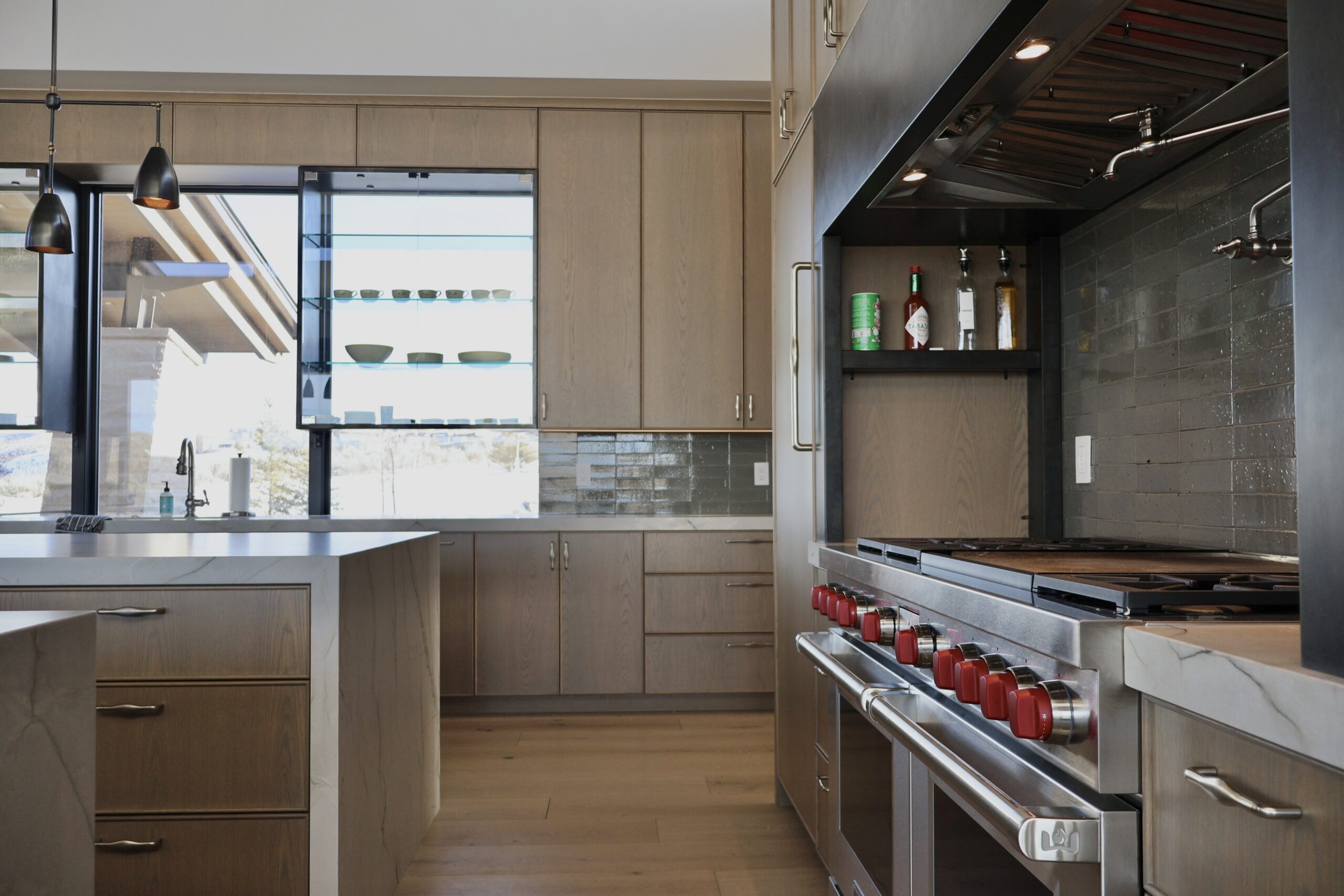
In a high-end home, cabinetry is rarely just a place to store things. It is part of the architecture, part of the daily experience, and often one of the largest visual elements in a room.
That is why fully custom cabinets can matter so much.
A fully custom cabinet is designed around the actual space, the way the homeowner uses it, and the design goals of the project. Instead of asking the room to accommodate a predetermined cabinet system, the cabinetry is developed to fit the room.
That difference becomes especially important in luxury homes, where unusual dimensions, premium materials, detailed architecture, and highly personalized storage are often part of the design.
The value of fully custom cabinetry is not simply that it looks different. It is that almost every part of it can be considered, adjusted, and built for its intended purpose.
Why Fully Custom Cabinets Matter in High-End Homes
Luxury homes often have details that standard cabinet sizes cannot address perfectly.
There may be an unusual wall length, a sloped ceiling, a structural column, a large window, or an appliance arrangement that requires a very specific solution.
Fully custom cabinetry allows those conditions to become part of the design rather than problems to work around.
The same applies to storage.
A homeowner may need deep drawers for cookware, a dedicated location for small appliances, tray dividers for baking sheets, or a hidden charging area. A pantry may need a combination of open shelving, drawers, pull-outs, and concealed storage.
These features are not simply added for appearance. They make the room easier to use.
In a high-end home, that level of detail matters because the cabinetry should support the way the space actually functions.
Designed Around the Space
One of the clearest differences between fully custom and semi-custom cabinetry is how the cabinets relate to the architecture.
With a predetermined cabinet system, the room may need to accommodate available cabinet sizes.
With fully custom cabinetry, the cabinets can be built around the room.
That means awkward dimensions can be handled without relying on unnecessary fillers or leaving valuable space unused.
A cabinet can be made to fit a specific wall, align with an architectural feature, or create a precise transition between different areas.
This is particularly valuable in European-style cabinetry, where clean lines and consistent reveals make small differences more noticeable.
Storage Can Be Designed Around Real Life
A beautiful kitchen can still be frustrating if the storage does not make sense.
Fully custom cabinetry gives homeowners more control over what happens inside the cabinets, not just what happens on the outside.
For example, a kitchen might include:
- Deep drawers for pots and pans
- Dedicated utensil organization
- Tray dividers for baking sheets and cutting boards
- Pull-out recycling and waste systems
- Appliance garages
- Pantry pull-outs
- Integrated lighting
- Charging drawers
- Specialized storage for spices or oils
- Shelving designed around specific appliances
The point is not to include every possible feature.
Instead, the storage can be selected based on how the homeowner actually cooks, works, entertains, and uses the home.
That is one of the biggest advantages of fully custom cabinetry.
Materials Are Part of the Decision
Fully custom cabinetry also gives more freedom when selecting materials and finishes.
A project may call for natural wood veneer in one area, a soft-touch engineered panel in another, and a painted finish somewhere else.
The cabinetry can be designed around those materials instead of forcing the design into a limited collection of available finishes.
Material selection also affects long-term performance.
For example, plywood can provide a strong cabinet box, while high-grade TFL can offer a durable, easy-to-maintain interior surface. Natural wood and veneer bring their own characteristics and require careful selection and finishing.
The right material depends on where the cabinet will be used and what the project requires.
In areas exposed to moisture, material selection becomes even more important. A bathroom vanity, laundry room, or other high-use space may require surfaces and construction methods chosen specifically for those conditions.
Construction Quality Matters Too
The outside of a cabinet gets most of the attention, but the construction behind it has a major effect on how the cabinet performs.
Quality hinges and drawer systems allow doors and drawers to operate smoothly over years of use.
Strong cabinet boxes provide stability.
Precise joinery and edge treatment help protect materials from everyday wear.
Moisture-resistant materials can be particularly useful in kitchens, bathrooms, and laundry spaces.
Hardware is another important part of the system.
At Euromax, we use Blum hardware throughout our cabinetry. Hinges, drawer runners, and specialty systems are not simply accessories. They are working components that affect how the cabinetry feels every day.
Good cabinetry should perform as well as it looks.
Fully Custom Does Not Mean One Construction Method
There is no single construction material that makes a cabinet “custom.”
Different projects call for different solutions.
Some homeowners prefer plywood construction and solid wood dovetail drawers. Others may choose high-quality TFL interiors and drawer systems because they offer excellent durability, easy maintenance, and a different price point.
Both can be appropriate.
The important question is whether the materials and construction are suitable for the project.
Fully custom cabinetry gives the design team the freedom to make those decisions based on the space, use, materials, and budget rather than forcing every project into the same specification.
Design Flexibility and Architectural Integration
High-end homes often contain architectural details that require more than standard cabinet dimensions.
Cabinetry may need to align with wall panels, windows, beams, doors, appliances, or other built elements.
Fully custom design makes it possible to coordinate those elements from the beginning.
A cabinet can be sized precisely around an architectural feature instead of leaving fillers or wasted gaps.
This becomes particularly important when working with interior designers, architects, and builders on complex projects.
The cabinetry needs to become part of the architecture rather than look like something installed afterward.
European Cabinetry and Fully Custom Design
European cabinetry is often associated with clean lines, frameless construction, integrated appliances, and efficient storage.
Those principles work especially well with fully custom design.
Frameless construction creates a clean cabinet interior and allows the design to use space efficiently. Integrated appliances can disappear into the cabinetry. Specialty hardware can be planned around the way each storage area will function.
The result is not simply a “European-looking” kitchen.
It is a space where the design, construction, materials, hardware, and function are considered together.
That same approach can extend beyond the kitchen into pantries, mudrooms, laundry rooms, bathrooms, home offices, bars, closets, and built-ins.
Fully Custom vs. Semi-Custom
Semi-custom cabinetry can be a very good solution for many projects.
It can offer a balance between customization, available options, production, and budget.
Fully custom cabinetry takes a different approach.
Instead of starting with a set cabinet system and modifying it within certain limits, the cabinets are developed specifically for the project.
That can provide more freedom with:
- Dimensions
- Materials
- Finishes
- Door profiles
- Storage
- Hardware
- Appliance integration
- Architectural details
Neither approach is automatically right for every home.
The important thing is understanding what the project requires before deciding which approach makes sense.
When Fully Custom Cabinetry Is Worth the Investment
Fully custom cabinetry becomes particularly valuable when the details of the home matter.
It can make sense when a project has unusual dimensions, highly specific storage needs, premium materials, complex architectural conditions, or a design that cannot be achieved easily with standard cabinet options.
There is also a long-term consideration.
In a luxury home, cabinetry can contribute to the overall impression of quality. Precise alignment, durable materials, thoughtful storage, and cohesive design can influence how a home feels and functions over time.
That can also matter when the home eventually enters the luxury resale market. Custom cabinetry will not guarantee a higher resale price, but well-designed, well-built cabinetry can contribute to the perceived quality and appeal of a high-end home.
How Long Do Fully Custom Cabinets Take to Build?
Fully custom cabinetry generally requires more planning than standard or semi-custom cabinetry.
Every project needs detailed design, measurements, material selections, hardware decisions, approvals, manufacturing, finishing, and installation.
That additional planning is part of what makes customization possible.
It also means that changes made later in the process can affect the schedule. For that reason, detailed planning and clear approvals are important before production begins.
The goal is not simply to build cabinets quickly.
It is to make sure the finished cabinetry is right for the space.
Can Custom Cabinets Match Existing Built-Ins?
Yes.
Fully custom cabinetry can be designed to coordinate with existing built-ins, millwork, architectural details, or furniture.
Matching may involve more than choosing the same color.
Material, grain direction, door profile, proportions, edge details, and hardware can all influence how closely new cabinetry relates to existing work.
In some projects, the goal is an exact visual match. In others, a complementary relationship creates a better result.
The flexibility of custom design allows those decisions to be made specifically for the home.
Are Fully Custom Cabinets Worth the Cost?
For some projects, yes.
The value comes from more than the cabinet itself.
It comes from the ability to design the cabinetry around the space, select appropriate materials, create storage around real needs, integrate hardware and appliances, and resolve architectural details with precision.
For a straightforward project with standard dimensions and limited customization, semi-custom cabinetry may be the better fit.
For a high-end home where the cabinetry needs to perform a specific role and integrate closely with the architecture, fully custom cabinetry can provide a level of flexibility that standard systems cannot.
The right choice depends on the project.
What Fully Custom Really Means
Fully custom cabinetry is not simply about having more choices.
It is about having the freedom to make the right choices for the space.
The cabinet dimensions can respond to the architecture.
The storage can respond to the homeowner.
The materials can respond to the environment.
The hardware can respond to how the cabinet will be used.
And the finished design can respond to the vision of the entire home.
That is what makes fully custom cabinetry especially valuable in high-end residential projects.
When every detail matters, the cabinetry should not be forced to fit a system.
The system should be built around the home.
 >
> >
> >
>