
Why the Same Wood Stain Looks Different on Cabinets
Choosing a stain color for custom cabinets may seem straightforward, but the final result often looks very different from expectations. That’s because wood stain looks different on cabinets depending on the material, the grain, and how the surface is prepared.
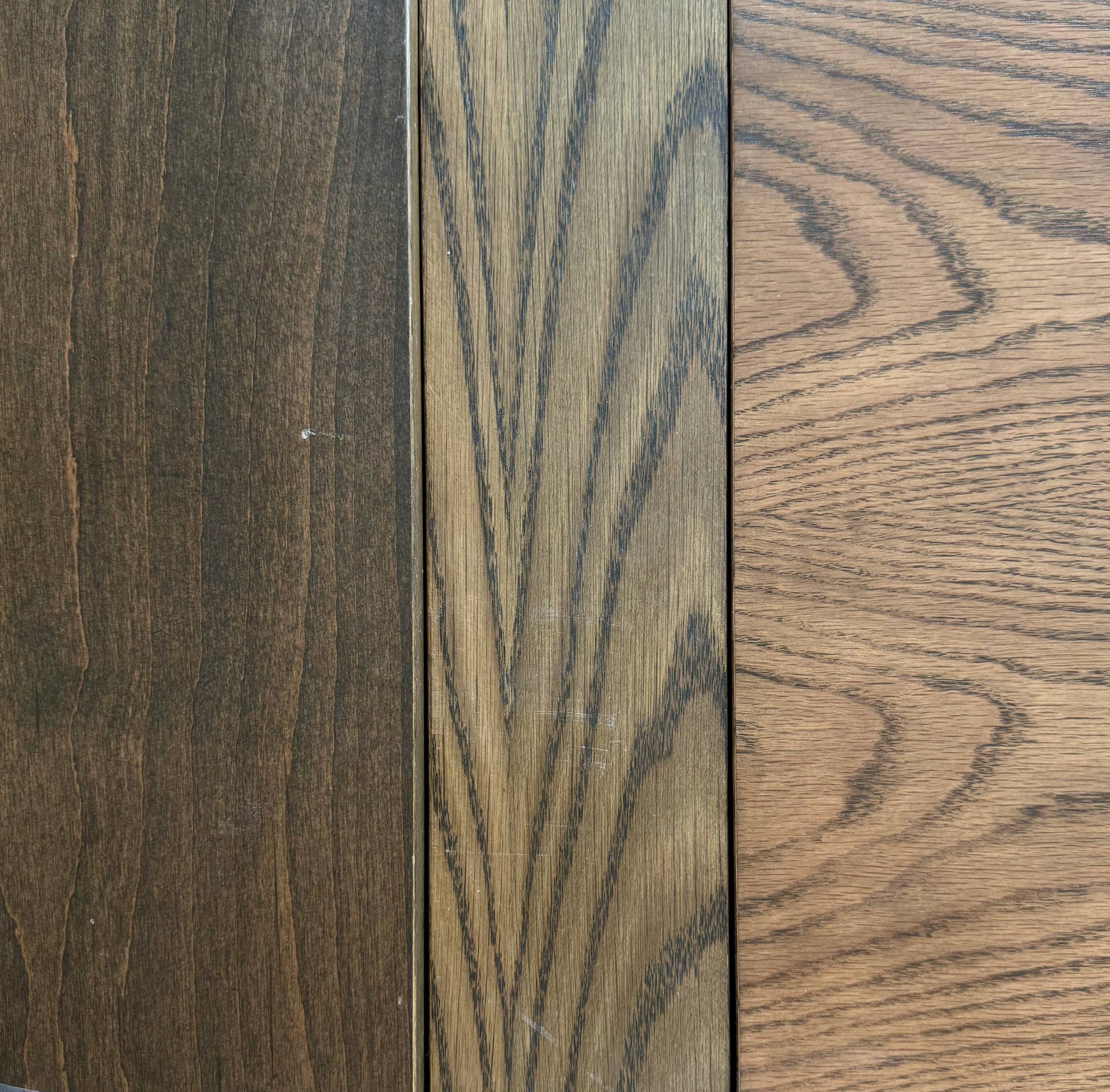
Choosing a stain color for custom cabinets may seem straightforward, but the final result often looks very different from expectations. That’s because wood stain looks different on cabinets depending on the material, the grain, and how the surface is prepared.
Understanding these factors is essential when planning custom cabinetry, especially for homeowners and builders in Salt Lake City and Park City who want a precise, high-end result. Keep in mind, wood stain looks different on cabinets, so careful planning matters.
Wood Species and Grain Structure
Different wood species absorb stain in different ways, causing the color to look different depending on which cabinets are selected.
Open-grain woods like oak allow stain to penetrate deeper, creating more contrast and variation. Tighter-grain woods produce a more even appearance but react differently to the same stain.
Even within one species, different cuts — such as rift, quarter sawn, or plain sliced — will affect how the stain develops. This is why two cabinet panels made from the same wood can still look noticeably different, making wood stain on cabinets unpredictable.
Why Variation Happens Even Within the Same Wood
Natural wood is not uniform, which is why the stain looks different, even if the samples are from the same batch.
Variations in tone, grain direction, and texture are inherent to real wood veneer. While careful selection and grain matching can create a more cohesive look, complete uniformity is not realistic.
For custom cabinetry, this is an important expectation to set early in the design process. So, remember that wood stain may look different on cabinets even when using the same wood species.
The Role of Surface Preparation
Preparation has a direct impact on how wood takes stain, which means it looks quite different on cabinets that are sanded or finished in unique ways.
Sanding levels, surface conditioning, and finishing techniques all influence absorption. Even small differences in sanding can lead to visible changes in tone.
Consistency in preparation is critical — without it, even identical materials and stains can produce inconsistent results and make wood stain look different on cabinets from the same set.
Why Custom Stain Samples Are Essential
Because so many variables affect the outcome, relying on a reference color alone is not enough.
Every custom cabinetry project should begin with a stain sample created using:
- the same wood species
- the same veneer cut
- the same preparation method
- the same finishing process
At Euromax, no project involving wood veneer moves forward without an approved sample. This ensures that expectations are aligned before production begins, since wood stain can look different across cabinets.
Common Misconceptions About Wood Stain
One of the most common misconceptions is that a stain color can simply be transferred from one material to another, even though the color looks different on cabinets made from various wood species.
In reality:
- Changing the wood species will change the result
- Adjusting preparation will change the result
- Expecting perfect uniformity will lead to disappointment
Understanding these limitations allows for better decision-making. In short, wood stain will look different on your product depending on these factors.
Our Approach to Custom Cabinet Finishing
Our process is built around control and consistency, since wood stain will have variations on cabinets not finished uniformly.
We handle finishing in-house, adjusting techniques based on the needs of each project. Some cabinetry is spray-finished for a clean, controlled look, while others are finished by hand to achieve a more natural character. That way, we address how wood stain looks on cabinets and ensure the best outcome for each style.
Every decision is intentional, and every detail is aligned with the design.
Conclusion
Stain is only one part of the final result. Keep in mind that wood stain looks different on cabinets depending on grain, prep, and finishing.
Wood species, grain structure, and preparation all play equally important roles. By understanding these factors early, it’s possible to achieve a more accurate, refined outcome in custom cabinetry.
For projects in Salt Lake City and Park City, this level of attention to detail makes a significant difference in both appearance and long-term satisfaction—and shows how stain looks different depending on cabinets and methods used.
 >
> >
> >
>