
Custom White Oak Cabinetry: Why Not All White Oak Is the Same
Custom white oak cabinetry is widely used in luxury interiors, yet not all white oak looks the same. Grain cut, veneer matching, and finishing techniques can dramatically change the final appearance. Understanding these differences helps homeowners and designers achieve more refined, balanced cabinetry.
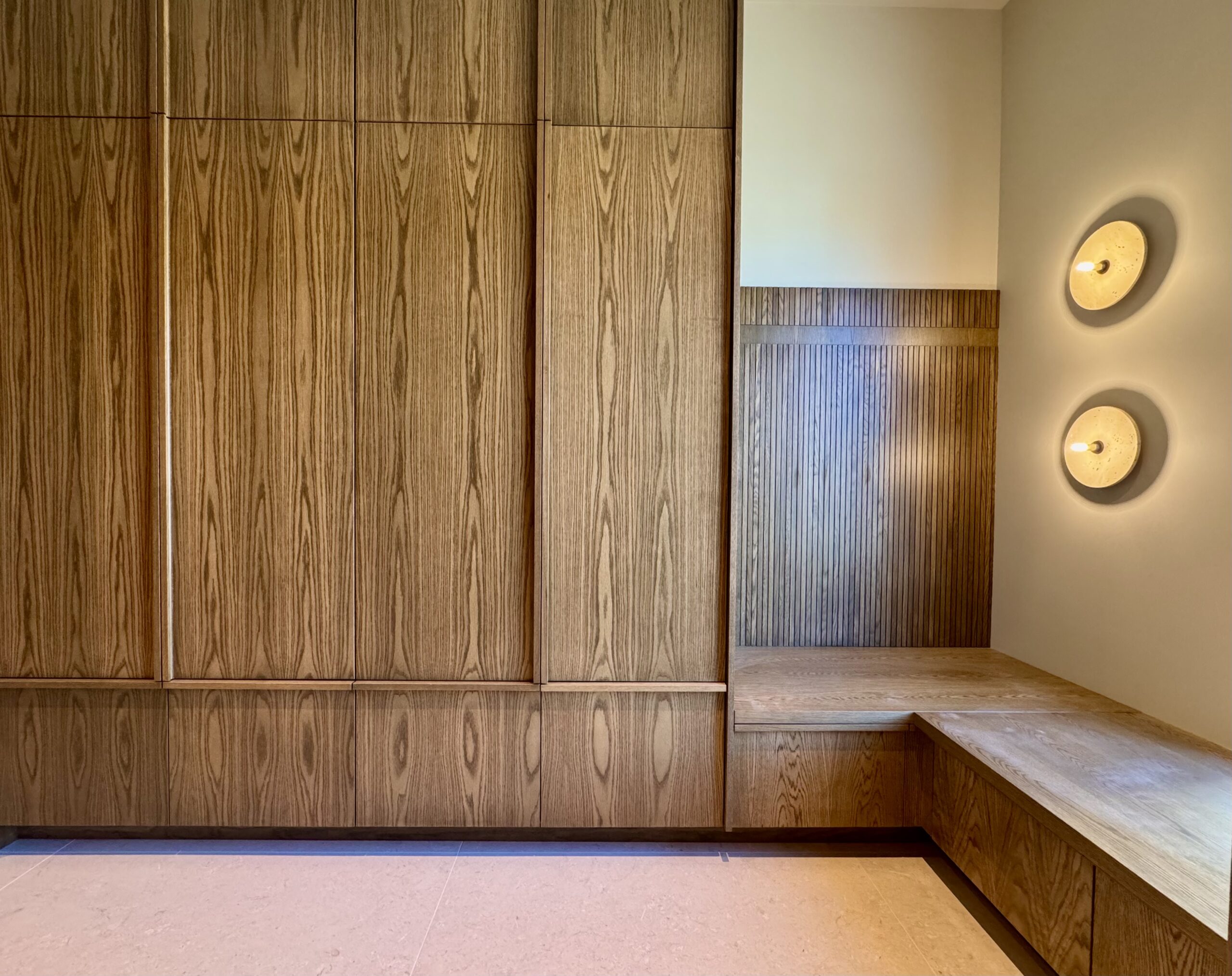
Custom white oak cabinetry has become one of the most requested materials in modern homes. Designers often choose it for its warmth, durability, and ability to complement both contemporary and traditional interiors.
However, one important detail is often overlooked.
Not all white oak is the same.
Two kitchens may both be described as “white oak cabinetry,” yet the final result can look completely different once installed. Grain patterns, veneer cuts, finishing techniques, and panel selection all influence how the material appears in a space.
Understanding these differences is essential when planning custom cabinetry, especially in large kitchens or built-in wall systems where the wood becomes a defining architectural feature.
Why White Oak Cabinetry Can Look Completely Different
White oak naturally contains variation in grain structure, density, and color tone. These characteristics give the wood its depth and natural beauty, but they also mean the final appearance depends heavily on how the material is processed.
Several factors influence the look of custom white oak cabinetry:
• the way the wood is cut
• veneer selection and grain direction
• grain matching across panels
• stain absorption and finishing techniques
• lighting conditions within the room
Even when two projects use white oak from the same supplier, these details can create dramatically different results.
Rift Cut vs Plain Sliced White Oak
One of the most important factors affecting white oak cabinetry is the cut of the wood veneer.
Plain Sliced (Flat Cut) White Oak
Plain sliced white oak produces the dramatic “cathedral” grain pattern many people associate with traditional wood cabinetry.
The grain flows in wide arcs across the surface, creating strong movement and visual texture.
This cut works well in:
- traditional kitchens
- rustic interiors
- spaces where wood character is meant to stand out
However, it can introduce more variation between cabinet panels.
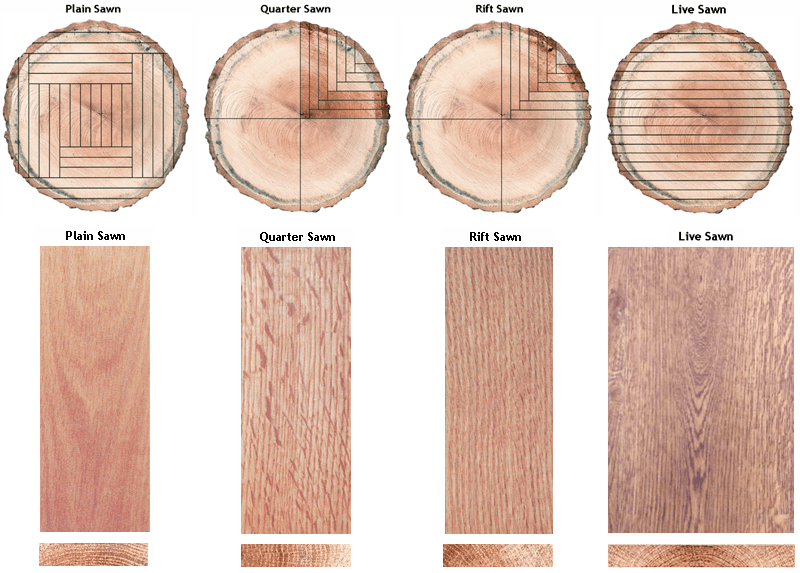
Rift Cut White Oak
Rift cut white oak produces a straight, vertical grain pattern with minimal cathedral shapes.
The result feels more structured and consistent, which is why rift cut oak is commonly used in modern and European-style cabinetry.
Designers often choose rift cut white oak when they want cabinetry to support architectural lines rather than dominate the space.
In large cabinet runs or floor-to-ceiling installations, this cleaner grain pattern creates a calmer visual rhythm.
Why Designers Often Prefer Rift Cut Oak in Modern Interiors
In contemporary homes, cabinetry often functions as an architectural element rather than decorative furniture.
Straight grain patterns reinforce vertical lines, especially when cabinets extend to the ceiling or integrate with wall panels.
Because rift cut white oak produces a more uniform grain, it helps create visual order across large surfaces.
Plain sliced oak, by contrast, introduces more movement. That can be beautiful in certain projects, but in minimalist interiors it may feel visually busy.
Choosing the right cut ensures the cabinetry aligns with the overall design philosophy of the home.
Grain Matching in High-End Cabinetry
Another detail that significantly affects custom white oak cabinetry is grain matching.
In high-quality millwork, veneers are carefully arranged so the wood pattern flows naturally across cabinet doors and panels.
Common grain matching techniques include:
Book matching – mirrored grain patterns across adjacent panels
Slip matching – consistent grain flow without mirrored patterns
Sequence matching – panels cut from the same veneer sheet for continuity
When done properly, grain matching creates the impression that cabinetry was carved from a single piece of wood.
Without this step, even premium materials can appear visually inconsistent.
How White Oak Absorbs Stain and Finish
White oak’s open grain structure gives it a distinctive texture, but it also affects how the material absorbs stain.
Different boards may take color slightly differently depending on density and grain direction. This is why professional finishing always involves testing stain samples on the exact material used for production.
Controlled finishing ensures the final tone is balanced across all cabinet surfaces.
When handled correctly, white oak develops a rich depth that synthetic surfaces cannot replicate.
How to Choose the Right White Oak for Cabinets
Selecting white oak cabinetry is not simply a material decision. It is a design decision that influences the overall atmosphere of a space.
Before finalizing cabinetry materials, it is helpful to consider:
• the desired grain pattern
• the level of visual movement in the design
• cabinet scale and proportions
• surrounding materials such as stone or flooring
• natural lighting conditions
These factors determine whether rift cut, plain sliced, or another veneer type will work best.
When thoughtfully selected, white oak cabinetry can feel both refined and timeless.
Why Material Knowledge Matters in Custom Cabinetry
Cabinetry often occupies the largest visual surfaces in a kitchen or living space. Because of this, the material selection has a lasting impact on how the room feels.
Understanding details like veneer cut, grain matching, and finishing techniques helps ensure cabinetry supports the architecture instead of competing with it.
In high-quality custom cabinetry, materials are never chosen casually.
They are selected carefully to create balance, continuity, and longevity.
Because in the end, materials shape the experience of the entire space.
 >
> >
> >
>