
Custom Cabinetry Quality: What the Inside of a Cabinet Reveals
Custom cabinetry quality is revealed behind the door. Interior materials, drawer construction, and hardware systems determine durability and performance. This guide explains how to evaluate cabinetry standards beyond appearance.
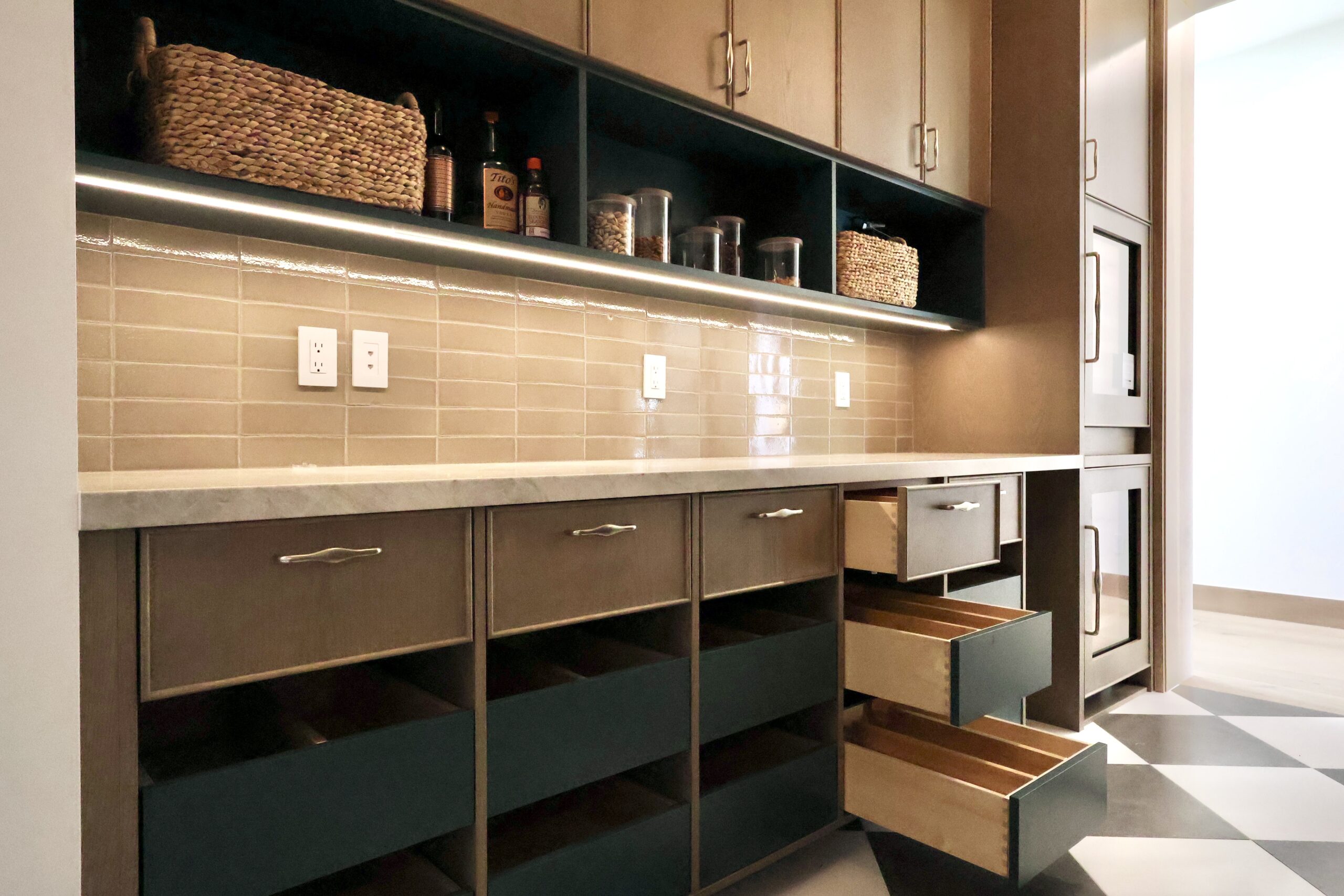
Custom cabinetry quality is not determined by appearance alone. It is revealed through interior construction, material standards, hardware systems, and fabrication precision.
While many cabinets look impressive when installed, true custom cabinetry quality becomes evident only after years of daily use. Open the door, inspect the materials, and examine the details — that is where long-term performance is defined.
Interior Cabinet Construction and Custom Cabinetry Quality
Interior cabinet construction directly impacts custom cabinetry quality. Materials expand and contract with humidity. Shelves carry weight. Hinges cycle thousands of times.
Low-grade cores, poorly sealed edges, or weak joinery may function at first but often lead to:
- Warped doors
- Peeling thermofoil
- Sagging drawers
- Visible seam separation
According to the Composite Panel Association, properly manufactured TFL panels provide strong durability and moisture resistance when engineered correctly.
Construction standards — not surface styling — determine longevity.
Cabinet Materials That Define Custom Cabinetry Quality
Material selection is one of the clearest indicators of custom cabinetry quality.
Interior finishes should never feel like an afterthought. High-quality TFL interiors offer durability, color stability, and moisture resistance. When properly fabricated, they provide a clean and modern solution for kitchens, bathrooms, and storage areas.
In more traditional builds, plywood interiors may be selected for structural rigidity and aesthetic continuity.
The decision should align with:
- Environmental conditions
- Project design direction
- Long-term performance expectations
Cabinetry quality is about choosing the right material — not automatically the most expensive one.
Edge Banding and Precision Fabrication
Edge banding exposes fabrication standards immediately.
Closely matched edge banding aligned with door style and tone demonstrates precision machining and attention to detail. Poorly applied edges often signal rushed production.
Even minor inconsistencies inside a cabinet can indicate larger systemic shortcuts.
Precision tolerances are a defining trait of custom cabinetry.
Drawer Construction and Cabinetry Quality
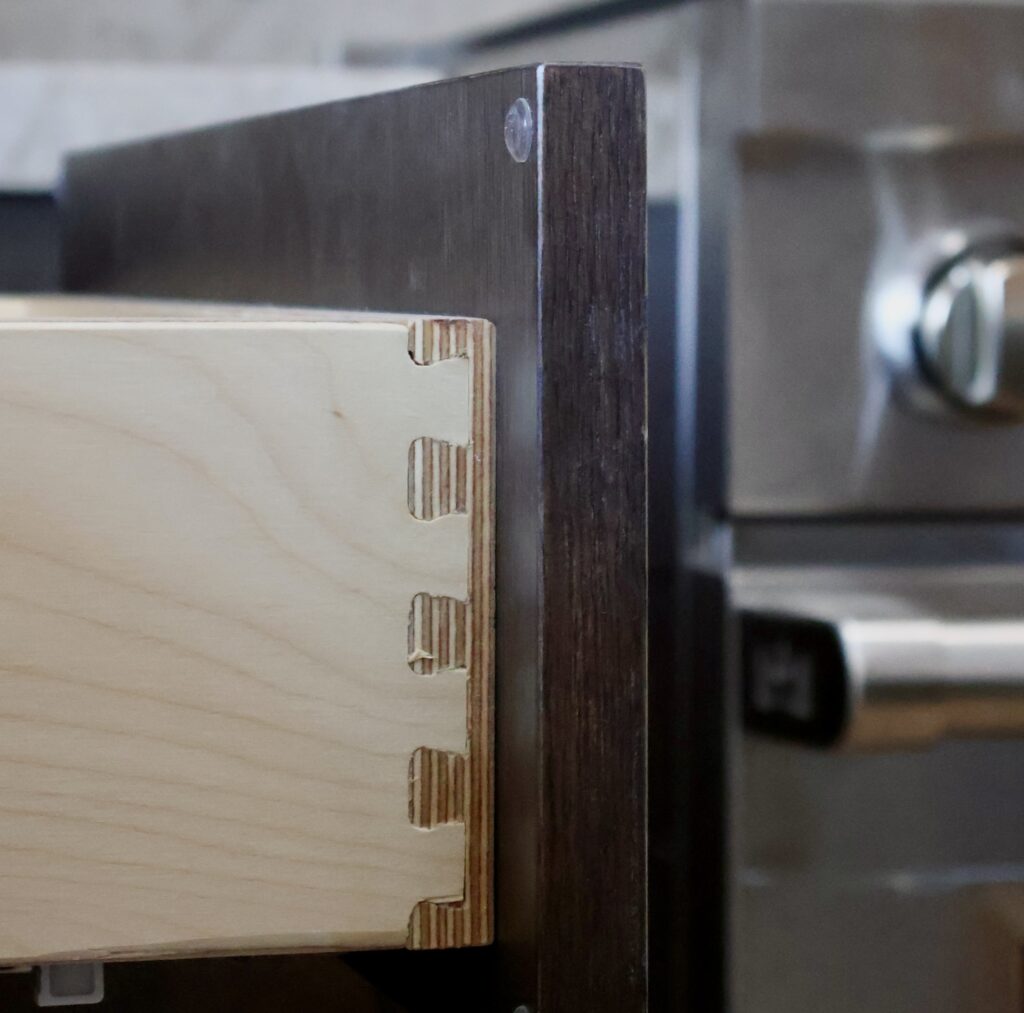
Drawer construction plays a central role in custom cabinetry quality.
Solid wood dovetail drawers remain a respected benchmark for craftsmanship. When engineered properly, dovetail joinery distributes weight effectively and withstands decades of use.
At the same time, modern high-quality TFL drawer systems offer excellent durability, moisture resistance, and structural consistency. In contemporary projects, these systems often provide a practical and performance-driven alternative.
Both methods can meet high standards.
The difference lies in execution, hardware selection, and load ratings. For example, premium European hardware manufacturers such as Blum engineer hinge and slide systems rated for tens of thousands of cycles.
Hardware quality directly affects long-term alignment and function.
Hardware Systems and Long-Term Performance
Custom cabinetry quality depends heavily on hardware engineering.
Entry-level hinges may operate smoothly at first but lose calibration under repeated stress. High-cycle European systems maintain alignment, allow adjustment, and perform consistently over time.
Mechanical components are tested through standardized cycle ratings, ensuring durability under daily use conditions.
This is where long-term investment truly pays off.
How to Evaluate Custom Cabinetry Quality Before You Hire
If you want to assess custom cabinetry quality objectively, open the cabinet and inspect:
- Interior material consistency
- Edge banding precision
- Drawer construction method
- Hardware brand and cycle rating
- Fabrication tolerances
These details reveal whether cabinetry was designed for visual impact — or engineered for longevity.
 >
> >
> >
>